

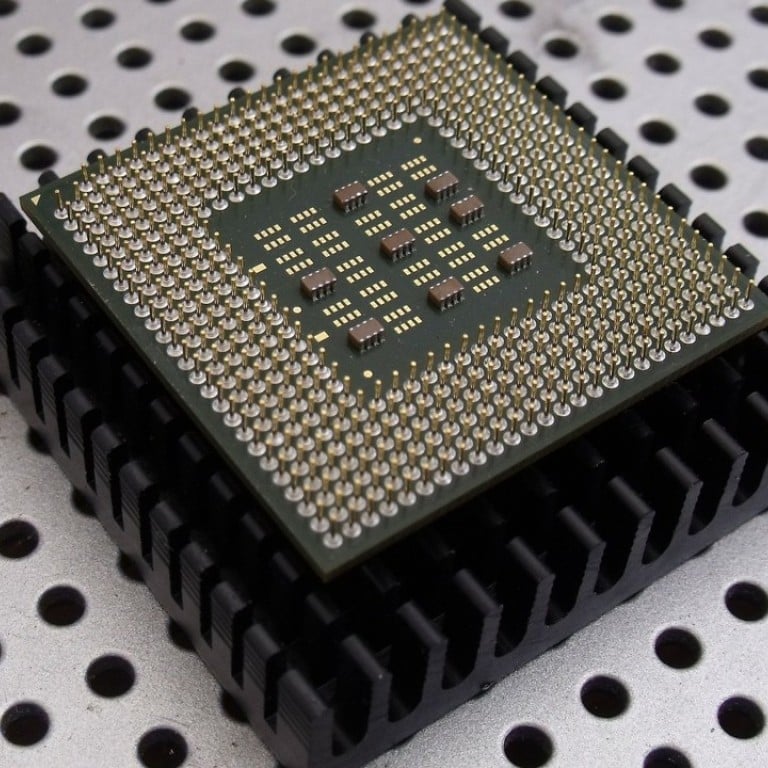
China’s Hua Hong Group has developed advanced chip manufacturing technologies that can be used for artificial intelligence processors. The news was reported by Reuters, citing four sources familiar with the matter. For Beijing, this represents one of the biggest milestones on its path toward technological independence. But what does it actually mean, and why should we care?
Hua Hong Group is China’s second-largest chip manufacturer. It has long stood in the shadow of its larger rival, SMIC, which until now was the only Chinese company capable of manufacturing chips using 7nm technology. But that is now changing.
Hua Hong Group’s contract manufacturing division, Huali Microelectronics, is preparing a 7nm manufacturing process at its plant in Shanghai. If successful, Huali will become only the second Chinese manufacturer capable of producing chips at this level. That is a huge leap. Until recently, Huali was manufacturing logic chips using 22nm and 28nm processes. Fab 6, the most advanced of Hua Hong Group’s seven plants, is thus becoming the center of China’s ambitions in advanced semiconductors.
Huawei Is Working Behind the Scenes
Chinese technology giant Huawei is involved in developing the 7nm technology. This was confirmed by three of the four sources contacted by Reuters. All declined to be named because the information is not intended for the public.
Huawei is no newcomer to this story. The company is behind SiCarrier, a domestic supplier of manufacturing equipment that tested its devices at a plant in Shenzhen. SiCarrier was involved in research and development of 7nm chips at Hua Hong’s Fab 6 plant, which began last year. China is thus building an entire domestic chip manufacturing chain, from equipment to the final product, and Huawei is playing a key role in the process.
Production is not yet in full swing. It is currently in the testing phase. Huali plans to reach an initial capacity of several thousand wafers per month by the end of this year, with the goal of gradually increasing it. The figure is not staggering, but it is a first step that opens the door to much greater ambitions.
One of its first customers is Chinese graphics processor designer Biren, which is using Huali’s 7nm line for a so-called tape-out, the process in which a chip design is converted into a physical prototype before mass production begins. Biren has little choice. After being added to a U.S. trade blacklist in 2023, it lost access to the services of Taiwanese manufacturer TSMC. Huali is thus becoming a lifeline for Chinese companies cut off from Western suppliers.
The Race with SMIC and the Shadow of ASML
A comparison with SMIC is inevitable. SMIC, China’s largest contract chip manufacturer, uses lithography machines from Dutch company ASML to produce 7nm chips using immersion lithography technology. However, analysts have long warned that manufacturing yield—the proportion of functional chips produced from a single silicon wafer—remains poor. ASML has declined to comment on questions about deliveries.
Reuters was unable to determine how Hua Hong achieved its advanced manufacturing capability, how efficient it is, or which equipment suppliers were involved in its development. The development of Hua Hong’s 7nm process had not previously been disclosed anywhere. That alone demonstrates how sensitive the subject is.
Beijing Pushes for Domestic Self-Sufficiency
The entire innovation is unfolding within a broader geopolitical context. Although Washington partially eased some export restrictions over the past year and allowed Nvidia to sell its second-most-powerful AI chips to China, Beijing is actively encouraging domestic companies to purchase Chinese alternatives and reduce their dependence on foreign suppliers.
In December, Hua Hong Semiconductor announced plans to acquire a controlling stake in Huali and increase its capital by 7.56 billion yuan (approximately $1.1 billion) to finance technology upgrades and research. This is a clear sign that it is a strategic investment with a long-term outlook.
The market reacted immediately. Hua Hong Semiconductor shares jumped 12% after the Reuters report was published. Investors clearly understood what this breakthrough means.
How Will the Race for AI Chips Develop?
If Huali truly masters stable and efficient production of 7nm chips, it will reshape the global semiconductor industry. China would no longer be dependent on a single domestic manufacturer of advanced chips and would build backup capacity in case U.S. sanctions are tightened further. Chinese companies such as Biren, as well as other chip designers cut off from TSMC, will seek domestic alternatives. And Huali has just emerged as the number-two candidate.
We will still have to wait a few years before China catches up with the West in advanced chips.


