

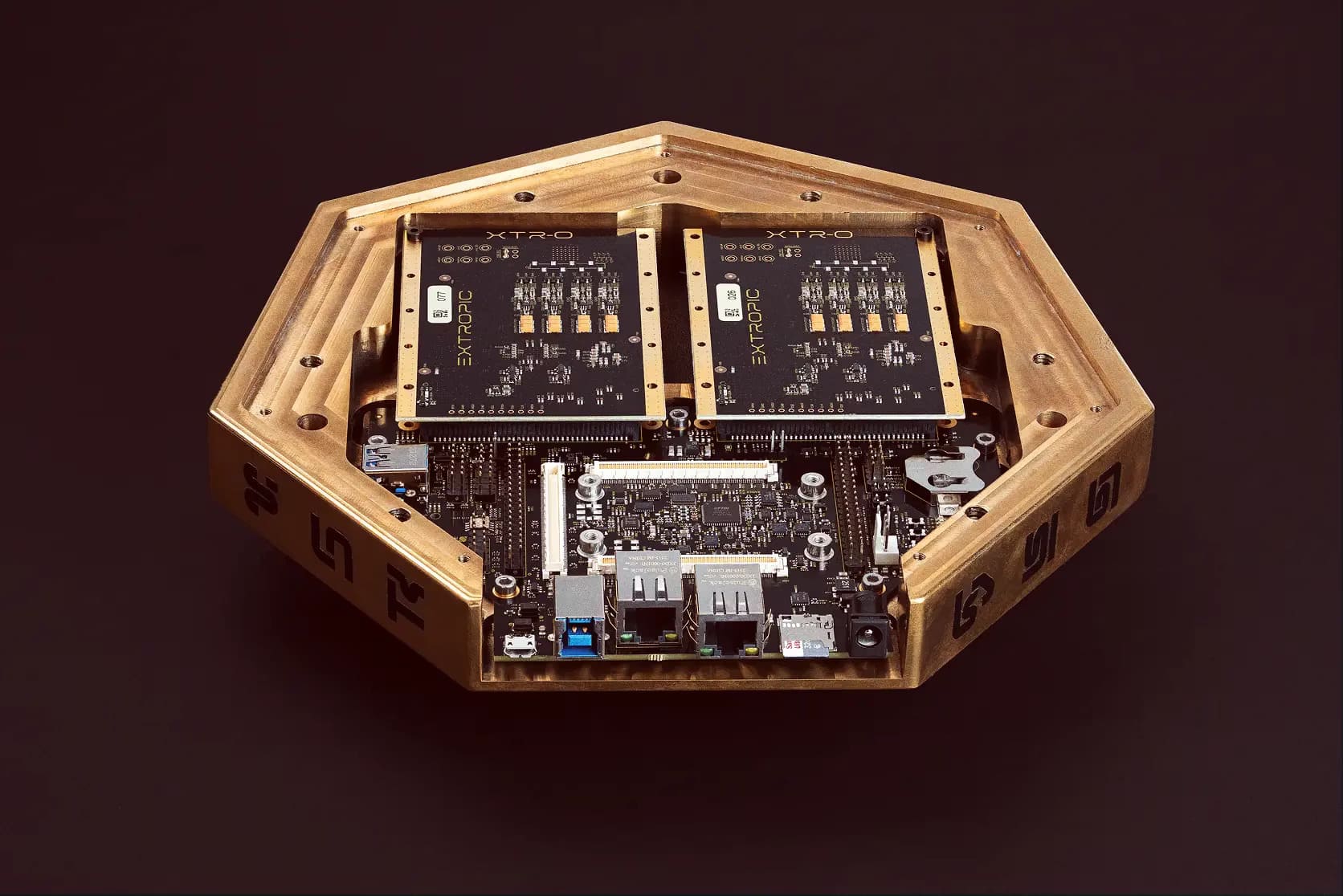
Extropic, a startup focused on artificial intelligence (AI) hardware, has introduced a new computing approach that promises to radically reduce energy consumption. Three years ago, the company bet that energy would become the main constraint on AI growth. Now it claims it was right. Its solution consists of hardware capable of running generative AI while consuming far less energy than today’s GPUs. Specifically, the company has developed the first scalable probabilistic computer, built circuits that process tasks using less energy, and created a new algorithm for this hardware.
Extropic envisions a future where AI helps discover new drugs, predict the weather, or automate manufacturing. But with today’s technology, operating at such a scale would consume more energy than we can produce. That is why the company has focused on computational efficiency. Instead of increasing energy production, it is building on the idea that a better computer can be created in a small garage near Boston.
The Energy Problem in AI Systems
Today’s AI systems using GPUs consume enormous amounts of energy, primarily because of communication between different parts of the chip. Transmitting bits of information requires charging wires, which is costly. Wire capacitance and signal voltages have not decreased much over the past decade. Extropic claims that continuing in this fashion would require enormous amounts of energy, as data centers are already struggling with power shortages. 92% of data center executives see grid constraints as a major obstacle to growth.
Extropic decided to rethink the entire architecture. Current AI algorithms were developed for GPUs, which were originally designed for graphics. This development was more evolutionary than intentional. But requirements have shifted toward probabilistic computing and energy efficiency. Extropic therefore developed hardware tailored specifically to these needs.
What Is a Thermodynamic Sampling Unit (TSU)
Extropic introduced a new type of hardware called a Thermodynamic Sampling Unit (TSU). Unlike CPUs or GPUs, which process deterministic operations, a TSU produces samples from a programmable distribution. Generative AI essentially means sampling from a complicated probability distribution. Modern systems do this through matrix multiplication, but a TSU bypasses this and samples directly from complex distributions.
A TSU works with energy-based models (EBMs), where the inputs specify an energy function and the outputs are samples from that distribution. A TSU consists of massive arrays of sampling cores that use the Gibbs sampling algorithm. This algorithm performs simple operations for complex models. The hardware combines simple probabilistic circuits into more complex distributions.
The TSU architecture differs from GPUs by storing and processing information in a distributed manner, with communication only between nearby circuits. This minimizes the energy required for data transfer. Extropic released the thrml library for simulating this hardware so that developers can test algorithms.
The Basic Building Block: Probabilistic Bit (pbit)
The first generation of the TSU is built on a network of probabilistic bits (pbits). Each pbit produces a voltage that randomly fluctuates between two states, interpreted as 1 or 0. The probability of each state is programmable, so the pbit serves as a source of samples from a Bernoulli distribution. A control voltage can be used to make the signal spend more time in one state.
A single pbit is merely a random number generator, but connecting many pbits creates a sophisticated TSU. The probability of each pbit depends on a bias and the weighted sum of the values of neighboring pbits. Extropic developed a new model of noise in electronic circuits, making it possible to design a pbit that uses less energy to generate randomness.
These pbits are small, energy-efficient, and made entirely from transistors. Extropic tested them in the XTR-0 hardware prototype, which is already being evaluated by partners. This makes it easy to integrate pbits into a full TSU.
A New Model: Denoising Thermodynamic Model (DTM)
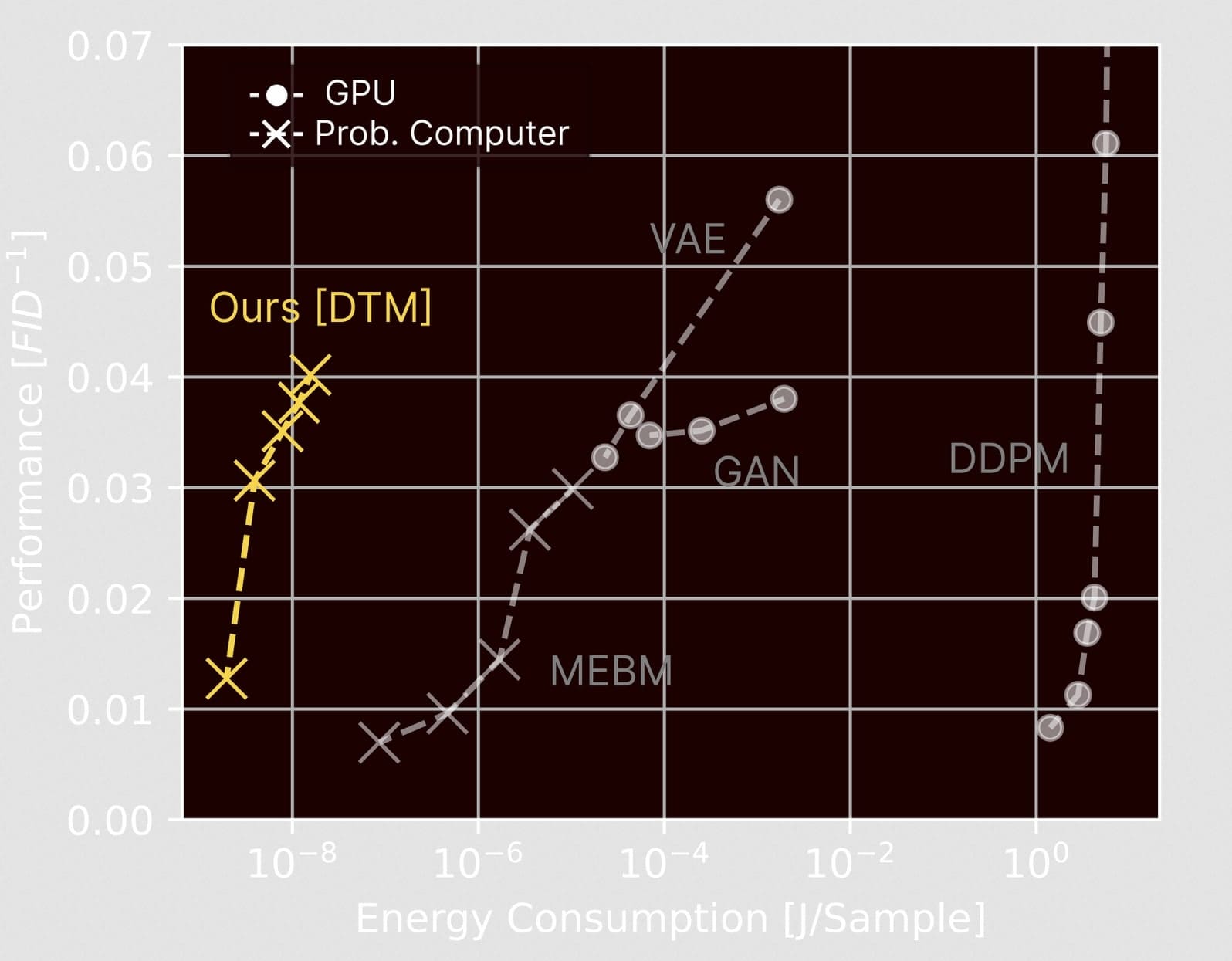
To demonstrate the hardware, Extropic created a new generative model called the Denoising Thermodynamic Model (DTM). Inspired by diffusion models, DTM generates data by gradually extracting it from noise through several stages. On a TSU, DTM could run with up to 10,000x lower energy consumption than algorithms on GPUs, according to simulations using the Fashion MNIST benchmark.
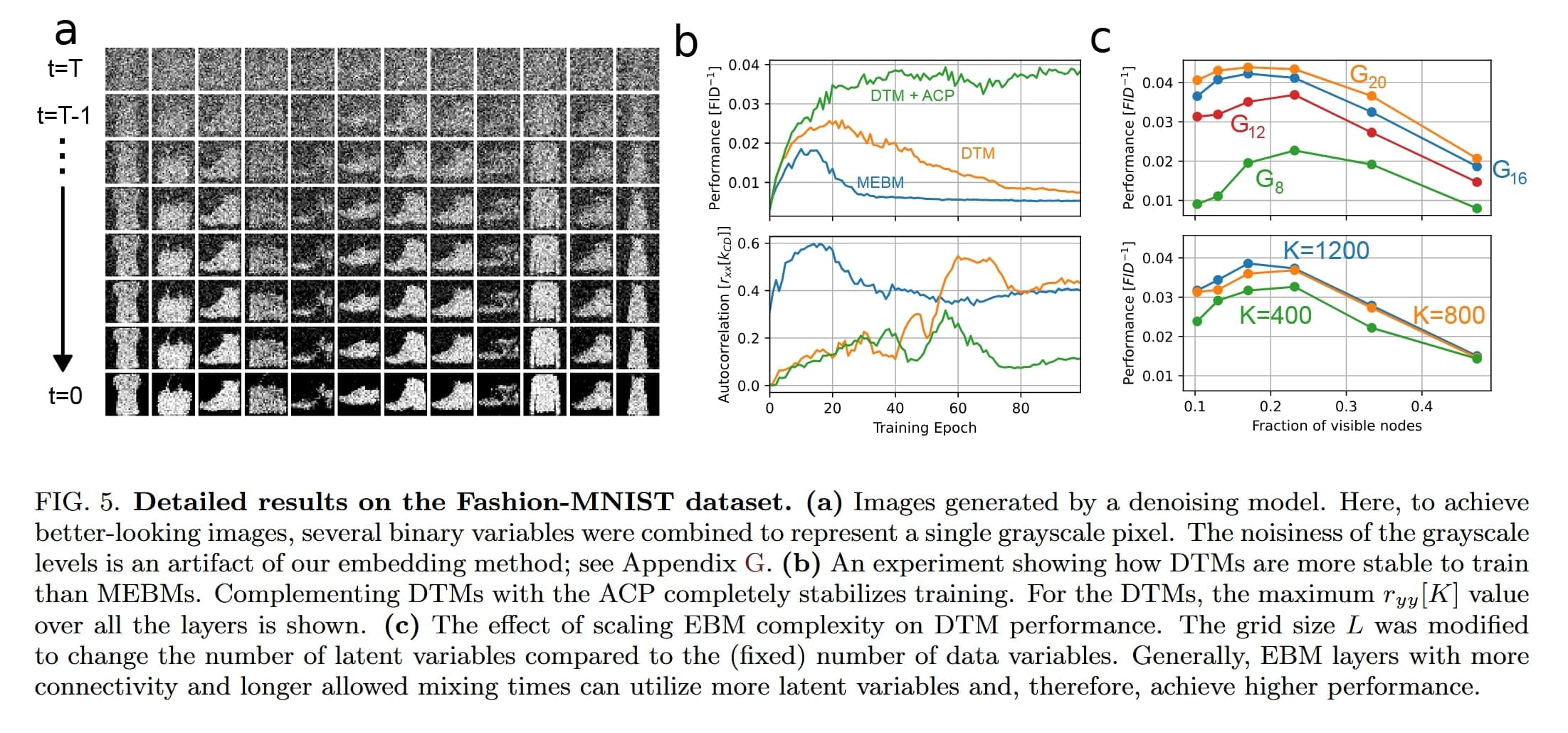
Extropic published a paper with results showing that simulations of small parts of the TSU consumed less energy. DTM is the first example of what can be done on a TSU. The company made the thrml library open source and funded an independent replication of the results that can be run on a GPU.
Extropic’s Plans
Extropic is now moving from research to manufacturing. The company is looking for integrated circuit designers and engineers to build larger systems. It wants to scale its algorithms to the level of today’s foundation models, including hybrid solutions with GPUs. It also plans partnerships for simulations in biology and chemistry.
Founders Guillaume Verdon and Trevor McCourt believe their approach will remove the energy constraints on AI growth. Verdon, a former Google employee in quantum computing, is known by the pseudonym Based Beff Jezos. Their Z-1 chip with 250,000 pbits should be capable of running diffusion models such as Sora or Midjourney. Extropic sees intelligence in the chaotic nature of the universe, where randomness is the key to progress.


