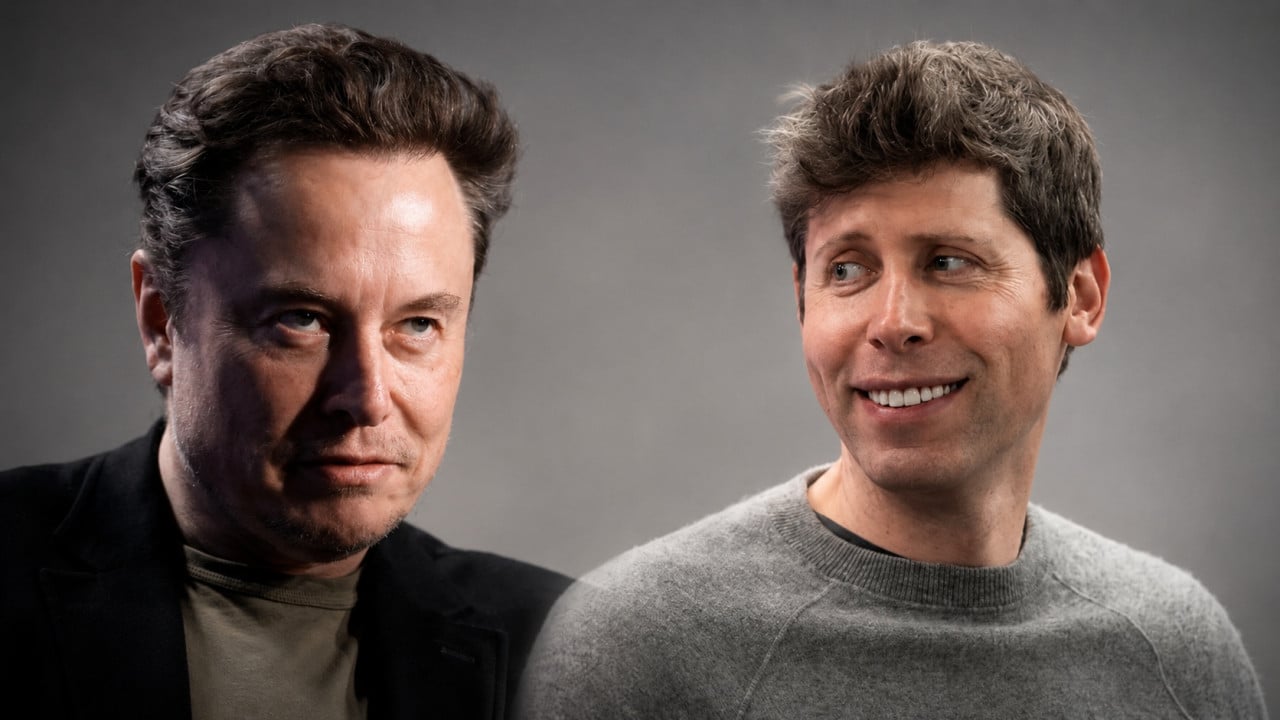
The courtroom drama that captured the attention of the entire tech world ended surprisingly quickly. A nine-member jury in California unanimously rejected Elon Musk's lawsuit against OpenAI and its CEO, Sam Altman.
Musk co-founded OpenAI in 2015 with Altman and others. In its early years, he contributed $38 million to it. But in 2018, he left the board after his fellow co-founders refused to let him take control of the company. Five years later, in February 2024, he filed a lawsuit. In it, he accused Altman, co-founder Greg Brockman, and the company itself of having “stolen his donations.” According to Musk, they manipulated him into donating money for nonprofit artificial intelligence research for the benefit of humanity, then converted it into a for-profit company behind his back. They subsequently supplied it with tens of billions of dollars from Microsoft and other investors.
“I was a fool,” Musk told the court in early May. “I gave them money for free to build a startup.” He wanted the court to order OpenAI to return more than $130 billion to a nonprofit fund, remove Altman and Brockman from management, and return the company to its original structure.
The jury reached a decision sooner than many expected
The trial began in late April and lasted three weeks. Musk, Altman, Brockman, Microsoft CEO Satya Nadella, OpenAI co-founder Ilya Sutskever, and Shivon Zilis, an executive at Musk's companies and the mother of four of his children, all testified. Hundreds of pages of private emails, text messages, and minutes from internal meetings were added to the record, including Brockman's personal diary and messages between Musk and Meta CEO Mark Zuckerberg about a possible joint acquisition of OpenAI.
In the end, however, the jury did not consider whether Altman and Brockman had actually breached the founding agreement. The jury began deliberating on Monday morning and reached a verdict in less than two hours. The conclusion was unequivocal: Musk knew about the conduct described in the lawsuit by 2021 at the latest. The three-year statute of limitations for his main claim therefore expired before he even filed the lawsuit. Judge Yvonne Gonzalez Rogers upheld the verdict. “The court confirms its earlier intention to adopt the jury's findings as its own,” she said in the courtroom. She added: “There is substantial evidence supporting the jury's conclusion, and I was therefore prepared to dismiss the lawsuit on the spot.”
After the verdict, OpenAI attorney William Savitt said the lawsuit was “a hypocritical attempt to sabotage a competitor” and that it “has nothing to do with reality.” Musk himself quickly responded on X. He called the judge a “terrible activist” who had “created a horrible precedent” and wrote that the verdict gave people free rein to “steal charities if you can keep it secret for a few years.” He later deleted the post. In another message, he announced an appeal and described the entire decision as a “calendar technicality.”
Regarding the OpenAI case, the judge & jury never actually ruled on the merits of the case, just on a calendar technicality.
— Elon Musk (@elonmusk) May 18, 2026
There is no question to anyone following the case in detail that Altman & Brockman did in fact enrich themselves by stealing a charity. The only question…
Altman's team presented a different version of events in court. According to OpenAI's lawyers, it was Musk who, at various points, pushed for the company to transition to a for-profit model so it could compete with Google. Altman recalled one specific conversation in court: “The co-founders asked him what would happen to control of the company when he died. He said something like: maybe it should pass to my children.”
According to Altman, Musk also proposed that OpenAI be incorporated into Tesla. When he failed, he left the company. And it was only after launching his own AI startup, xAI, in 2023 that he filed the lawsuit. “Mr. Musk may have a gift for turning everything he touches into gold in some areas,” Savitt said in his closing argument, “but that is not the case in artificial intelligence.”
Musk will appeal. But his chances are slim
Musk's lead attorney, Marc Toberoff, said at a press conference after the verdict: “I have summed up this war in one word: appeal.” They plan to take the case to the Ninth Circuit Court of Appeals. But Judge Gonzalez Rogers indicated that the road ahead would be steep. The statute of limitations issue is a factual rather than a legal one, and appeals courts generally do not reconsider facts established by a jury.
“Appeals of jury verdicts are very difficult to win,” Raffi Melkonian, an attorney who has argued before the U.S. Supreme Court, wrote online after the verdict.
The trial also revealed matters that had previously remained outside the public eye. It showed how important a role Google played in the creation of OpenAI, as the lab sought a way to surpass what was then the largest company in the emerging field of AI. It also revealed various funding options that OpenAI considered, including cryptocurrencies.
Zilis's testimony revealed that she and Musk had been romantically involved for significantly longer than previously known. The court also heard how, after Musk left OpenAI, she served as an informal channel between him and the company's leadership. And Microsoft, as a co-defendant, managed to state in its defense that it had invested more than $100 billion in its partnership with OpenAI. After the verdict, it issued a brief statement: “The facts and timeline in this case have long been clear.”