Chinese lab DeepSeek has disclosed its revenue figures for the first time. Its annual revenue is approaching half a billion dollars. The company is also in talks to raise additional funding and is preparing to go public as early as next year. This was reported by The Information, which has been cited by other media outlets.
A real business emerges for the first time
For most of last year, DeepSeek was described as a company building cutting-edge models almost for free. Now it is becoming clear that there is a viable business behind it. Annual revenue is heading toward $500 million. This is the first time the company has ever disclosed its revenue.
The revenue figure emerged amid an unusually rapid series of funding rounds. DeepSeek recently closed its first-ever round, raising around $7 billion at a valuation of roughly $50 billion. Barely a few weeks later, the company is reportedly in talks to raise another approximately $1.5 billion, this time at a pre-money valuation of around $71 billion, according to Bloomberg.
Where the money will go is fairly clear. DeepSeek wants to build its own data center and buy more artificial intelligence chips. It is being driven by demand for autonomous agents—programs capable of completing more complex tasks on their own.
Its own chip
The company is also hiring chip design engineers. Its goal is to build its own chip for so-called inference deployment, meaning the operation of already completed models. This would reduce its dependence on Nvidia hardware, which is subject to U.S. export restrictions.
Meanwhile, the economics of its operations look surprisingly strong. DeepSeek charges $2.19 per million tokens, while OpenAI charges $60. That is roughly twenty-seven times less. Even so, according to available data, the company maintains a gross margin of between seventy and eighty percent.
The operating figures are making competitors nervous as well. TechCrunch noted that in June 2026, DeepSeek processed around twenty-three percent of tokens on the Vercel platform, compared with Anthropic's thirty-two percent. The lead held by U.S. labs is therefore narrowing.
What's the catch?
Experts are treating the figure with caution, and for good reason. It comes from a single source, not from audited financial statements. The report says nothing about how much cash the company is burning or how its revenue is divided among developer interfaces, corporate customers, and ordinary users.
The ownership structure is also unusual. According to available information, founder Liang Wenfeng owns around seventy-seven percent of the company. Investors in the latest round also invested their money in a limited partnership managed by Liang himself, with a five-year lock-up period and no voting rights.
Shanghai in 2027
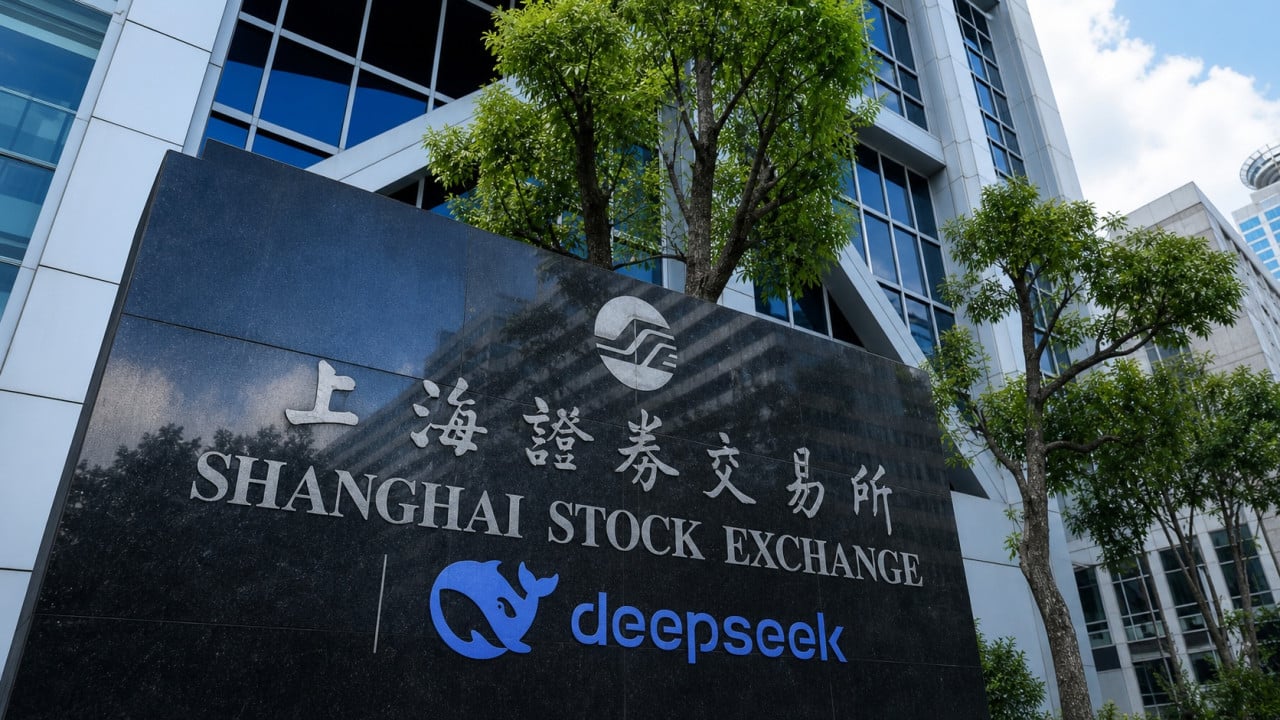
DeepSeek is preparing for a listing on a mainland Chinese stock exchange. It could file its application as early as the end of 2026 and is planning its debut on Shanghai's STAR Market in 2027, possibly as early as the second quarter. China's securities regulator, the CSRC, will have the decisive say.
If successful, DeepSeek will become a rare publicly traded Chinese artificial intelligence stock. The pressure will then mount on domestic rivals such as Zhipu AI and Moonshot AI, as well as global names like OpenAI and Anthropic. All of them will have to reckon with such a competitor.
The announcement of the planned listing alone lifted shares in other Chinese companies in the sector. Blockonomi recorded a fifteen percent jump in MiniMax and a nine percent rise in Knowledge Atlas Tech during the same trading session.