The United States can block China’s access to the most powerful chips. But it is much harder to prevent it from obtaining the answers produced using those chips. Reuters reviewed more than 300 Chinese documents, ranging from scientific studies and patents to corporate reports, job advertisements and government materials. Its investigation shows that the so-called distillation of American artificial intelligence models has moved from university laboratories into standard corporate practice in China.
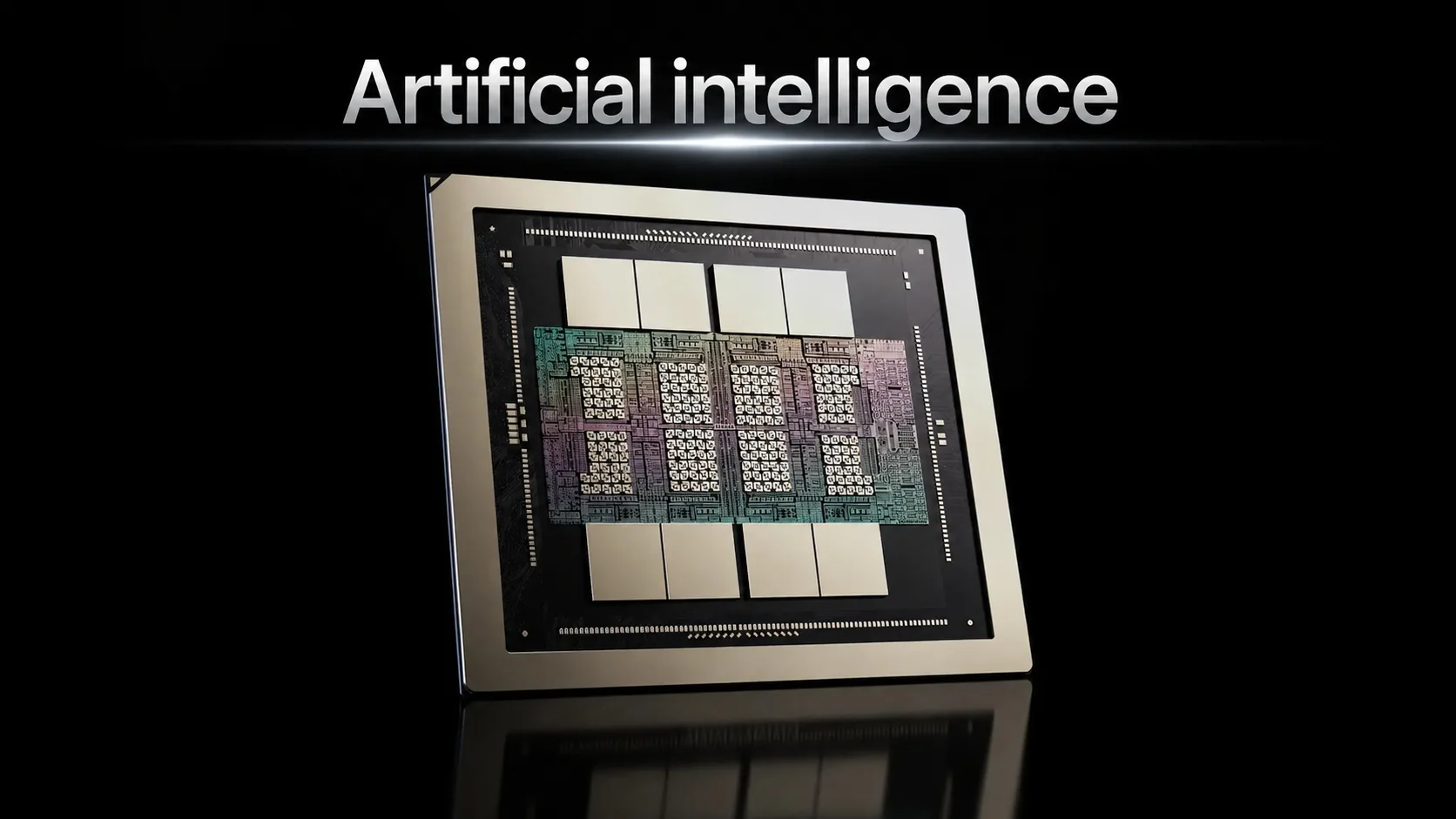
This is unwelcome news for Washington. The Trump administration is currently tightening rules on exports of advanced chips, including those made by Nvidia, and distillation could significantly weaken their impact.
How distillation works
A large and powerful model, known as the teacher, answers questions, writes code or solves complex tasks step by step. Its answers then serve as training material for a smaller and cheaper model, known as the student. The student learns to handle similar tasks without its developers having to use as much computing power.
The technique itself is not illegal and is used by almost everyone in the industry. However, American companies have clear rules. With certain exceptions, OpenAI prohibits the use of its models’ outputs to develop competing systems, and Anthropic has a similar prohibition unless it grants permission.
For a laboratory that lacks chips, distillation makes clear economic sense. A former Alibaba engineer explained to Reuters that the aim is to make one expensive query do its work repeatedly. The American model solves a complex problem once, and Chinese developers then benefit from that single example again and again.
However, it is not a magic trick. Distillation cannot copy an entire cutting-edge model, nor does it eliminate developers’ need for powerful hardware. The outcome also depends heavily on the quality of the data obtained and the resources available to the developers.
Universities and major companies
One example uncovered by Reuters comes from Shanghai Jiao Tong University. In November 2024, researchers there described how they selected roughly 5,000 responses from OpenAI’s o1 model, had them translated by the smaller GPT-4o mini model and used them to create more than 10,000 bilingual examples. They then used these to fine-tune Alibaba’s Qwen2.5-72B model. This allowed them to reuse the American system’s outputs without having to ask it the same questions again. At the same time, however, the authors warned that excessive reliance on distillation could hinder original ideas and leave developers dependent on the progress of other companies.
Alibaba itself followed a similar path. In April 2025, its researchers had the GPT-4 and GPT-4o models generate training data in languages other than Chinese. They then edited and verified the material and used it to train smaller Qwen models. In February 2026, the Shanghai university partnered with delivery company Meituan and had GPT-4o design plans for AI agents to collaborate on programming tasks. A smaller model was then trained on these plans so that it could manage similar work on its own.
The data collection process itself is also gradually becoming automated. Chinese companies are developing software that downloads responses without human intervention, while specialized workers prepare the collected material for training domestic systems. The university, Alibaba and Meituan did not respond to Reuters’ questions.
Beijing vs. Washington
None of the government documents reviewed by Reuters directly instructs Chinese companies to distill American models. However, a national package of measures for artificial intelligence in manufacturing issued by eight government agencies in January openly supports the training, fine-tuning and distillation of systems for industry. Local authorities in Shanghai and Shenzhen are also promoting methods that conserve computing power. Beijing wants artificial intelligence throughout the economy and is seeking to make it affordable. Distillation can also be performed using domestic models, so the technique itself does not necessarily imply unauthorized access to foreign technology.
This did not reassure the Americans. During meetings in Chengdu in July, representatives of the U.S. Department of Commerce warned Chinese officials that some forms of distillation could constitute intellectual property theft. The Chinese side responded that it was a standard technique and indicated a willingness to address cases of genuine abuse. However, it made no specific commitment. That same month, Treasury Secretary Scott Bessent threatened that Chinese companies covertly stealing intellectual property on a large scale through distillation could face sanctions or be placed on a U.S. blacklist.
According to a U.S. official familiar with the Chengdu talks, mass distillation is the main reason Chinese models are catching up with their American counterparts. However, two people familiar with the work of Chinese developers see it differently. According to them, better engineering, algorithms, data and model design have all contributed equally to the progress.
In early September, U.S. intelligence agencies took a tougher stance. On September 8, the NSA, FBI and CISA issued a joint warning accusing six Chinese companies—specifically DeepSeek, Moonshot AI, Alibaba, MiniMax, StepFun and Z.AI—of aggressive and targeted industrial-scale distillation. According to the agencies, distillation is not merely an addition to these companies’ strategies but lies at their core. Queries are allegedly routed through intermediaries that resell access to American models at a fraction of the standard price. Anthropic announced in February that it had detected more than 16 million conversations with Claude conducted through roughly 24,000 fake accounts and attributed them to DeepSeek, Moonshot and MiniMax.
This is not limited to civilian research. In late July, Reuters, together with the U.S.-based Jamestown Foundation, published an investigation into more than 80 studies and patents. It showed that Chinese military researchers had distilled the GPT-3.5 and Claude 3 Haiku models for social media monitoring, drone control and maritime target recognition. Beijing dismissed this as a manifestation of American hegemonism and pointed out that U.S. companies do the same thing.
The chip export ban has loopholes
On November 16, the U.S. Department of Commerce tightened the conditions once again. The new rule requires a license to export advanced chips to data centers in Singapore, Malaysia, Thailand, Indonesia and Brazil. An additional license is required for any large data center anywhere in the world that wants to lease these chips to companies headquartered in China. Operators already doing so have 90 days to comply. Washington is responding to the case involving Singaporean company Megaspeed, which it suspects of smuggling Nvidia chips into China. The company denies the allegations. Meanwhile, Beijing has largely prohibited domestic companies from purchasing Nvidia chips and is steering them toward local manufacturers such as Huawei.
The new rules are intended to make it harder for Chinese developers to remotely access American chips and the computing capacity they need to train advanced models. However, distillation offers them a way to reduce their dependence on American technology, which is precisely why, according to Reuters, it could significantly weaken the export restrictions. The dispute will also be on the agenda at the APEC summit in Shenzhen, where Donald Trump and Xi Jinping are expected to meet this week.
Chinese developers are well aware that they are walking on thin ice. In recent months, they have therefore approached Beijing’s Ministry of Industry and Information Technology to ask where ordinary use of a foreign model ends and organized collection of its responses begins. The ministry did not comment.
Sources: zaobao.com, ilpoliticoweb.it and yahoo.com