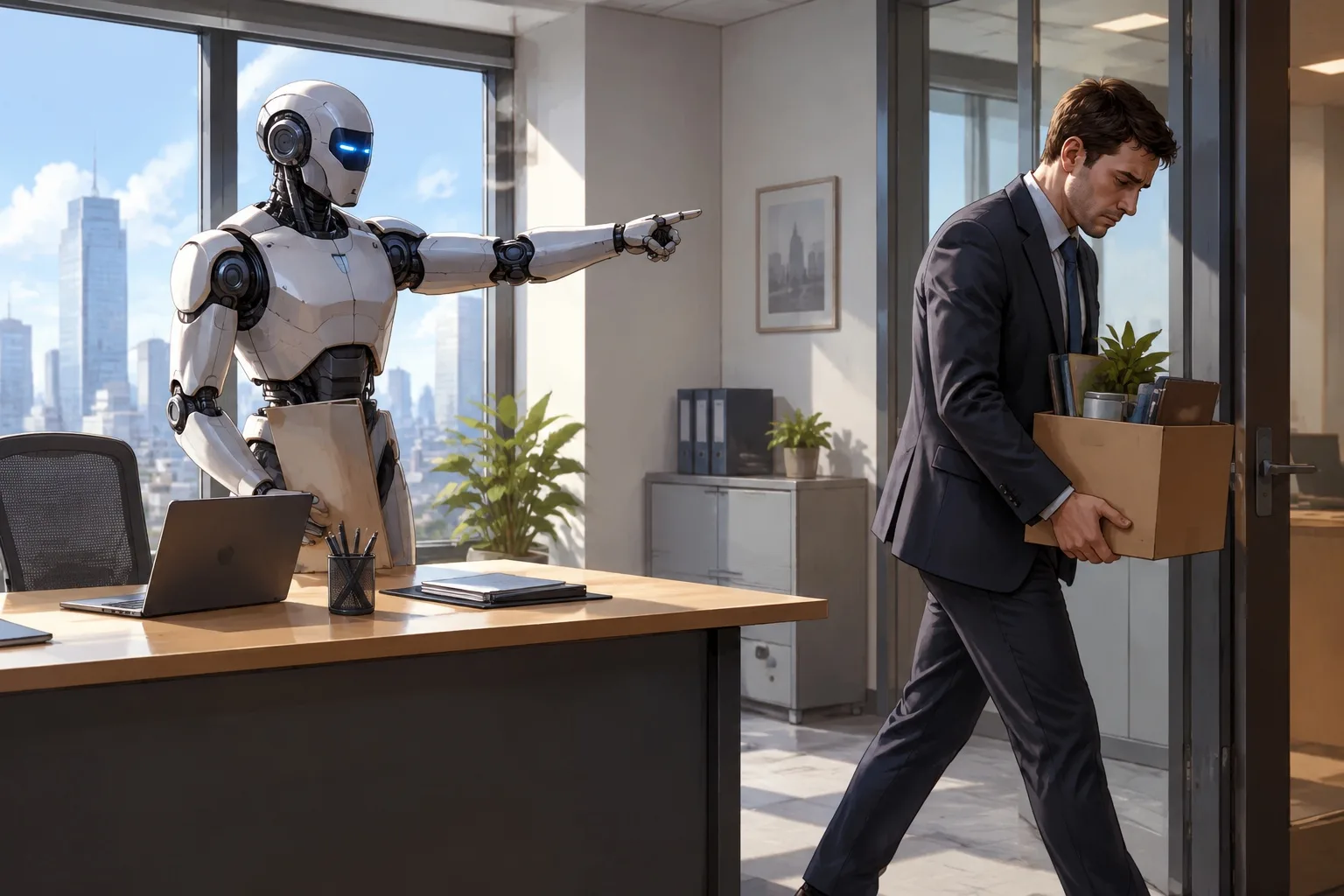
California Governor Gavin Newsom has signed a law Americans have nicknamed the No Robo Bosses Act. Under the law, companies in the most populous U.S. state may not rely solely on automated systems when disciplining or firing employees. Software may make recommendations, but the final decision must be made and verified by a human. The rules will take effect on July 1 next year.
California lawmakers already tried this last year. At the time, Newsom vetoed the first version, saying it was too broad. Senator Jerry McNerney’s new proposal was therefore made less stringent. It protects only employees, not independent contractors or job applicants. It applies only to disciplinary action and dismissal, not hiring. The requirement to provide advance notice that a company uses an automated tool was also dropped, as was the restriction on using customer ratings as the main basis for decisions.
Despite its combative name, the law does not impose any blanket bans. Companies may continue using tools that score, rank, and evaluate employees. The regulation only comes into play when a number on a screen becomes a decision about someone’s job.
Clicking “approve” is not enough
The rules have two levels. A company may not rely exclusively on a system’s output. If it relies on it primarily, the decision must be confirmed by a human who reviews the actual evidence. This may include an evaluation by a supervisor, a personnel file, work performed, reviews by colleagues, or witness statements, which the legislation explicitly defines as including online customer reviews.
If a manager cannot substantiate the system’s verdict, or finds that it is inaccurate, incomplete, or misleading, they may not use it. Attorney Anthony Zaller, who represents employers, points out that a supervisor who merely clicks to approve the software’s recommendation will not comply with the regulations. The review must be genuine and documented.
The law defines automated systems much more broadly than tools marketed under the AI label. It includes anything that turns data into a score, classification, or recommendation. A database containing attendance records is not covered by the law, but a report that uses those same records to calculate an employee’s “reliability” is. In practice, this includes, for example:
- attendance systems that automatically assign penalty points for arriving late
- measurement of service speed or the number of rooms cleaned per shift
- analysis of checkout data to monitor voids and discounts
- camera systems that send alerts about employee behavior
The size of the company does not matter, and the law also applies to state and public-sector employers.
What a dismissed employee will learn
When a company dismisses someone and relied mainly on software in doing so, it must provide them with a separate written notice at the same time. The notice must clearly state, in the language the company normally uses to communicate with the person, that the decision was based on an automated system, that it was reviewed by a human, whom they can contact with questions, and that they have the right to request a description of the data about them that the system used. The company must also inform them that no one may retaliate against them for exercising these rights.
A court dispute then proceeds differently from what the average European reader might expect. Once it has been shown that the company used an automated system, the burden of proof shifts to the company. It must demonstrate that it did not rely primarily on the system or that it followed all the required steps. Each violation carries a fine of $500, and compliance will be overseen by the state labor commissioner and public prosecutors.
Three things are completely prohibited, and even human oversight does not make them permissible. A system may not be used to violate labor and anti-discrimination laws, infer a person’s protected characteristics, or predict that an employee will exercise their rights so the company can punish them in advance. According to Zaller, a tool that flags people as, for example, a union-organizing risk is a serious problem.
Europe has similar rules so far only for platforms
For Europeans, this is not entirely new. The EU Platform Work Directive already requires a human to decide whether to block or terminate a courier’s or driver’s account. California, however, mandates human review for all employees, from waiters to salespeople. Sales in particular shows how fine the line is between training and evaluation. Forbes notes that roughly nine out of ten salespeople at ServiceNow use an AI-powered virtual coach that evaluates their practice sales conversations. The article’s author, Bryan Robinson, advises employees to ask exactly what the system measures and how its results are used, and to retain their own evidence of their performance and any context that spreadsheets overlook.
The No Robo Bosses Act was one of thirteen artificial intelligence laws that Newsom signed that day. Another bans artificial intelligence that reads employees’ emotions, while another restricts surveillance in company restrooms. Starting in January 2027, companies will also have to disclose in mass layoff notices if automation is behind the layoffs. Newsom signed all of them at a time when the White House was hosting the heads of the largest companies developing artificial intelligence.
Sources: forbes.com, californiaemploymentlawreport.com and yahoo.com