

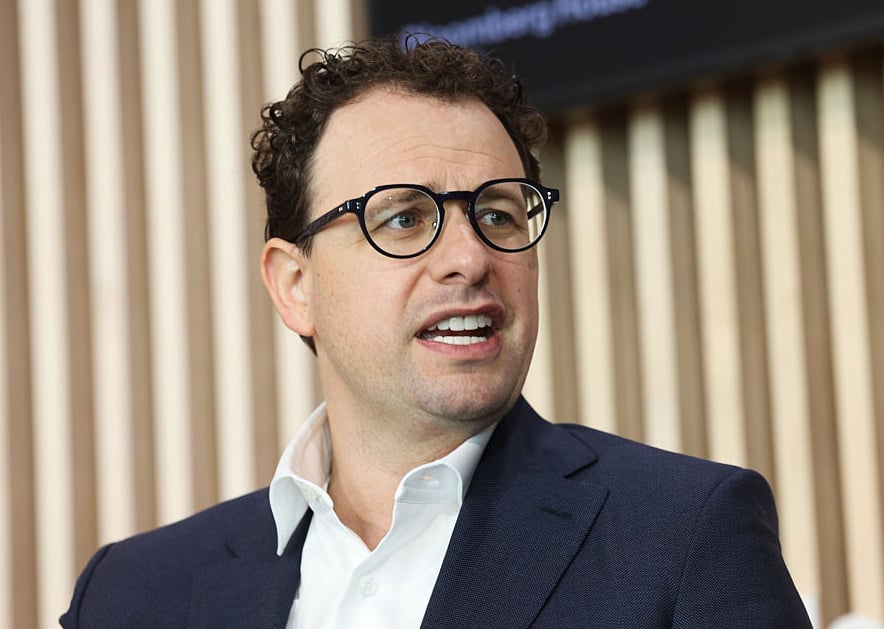
Most technology CEOs manage large teams of senior executives. Dario Amodei, co-founder and CEO of Anthropic, the company behind the Claude artificial intelligence system, is taking a different approach. Only one person reports directly to him. And while competitors spend their days dealing with operational details, Amodei devotes nearly half his time to company culture and publicly warning about the risks of artificial intelligence.
One direct report is enough
How do you run a company with 2,500 employees when you have only one direct report? Amodei described it in an interview with Bloomberg. The only person who reports to him is his chief of staff, Avital Balwit. The rest of the company’s leadership reports to his sister, Daniela Amodei, who oversees the company’s day-to-day operations and reports to the board of directors.
“It’s incredibly liberating,” Amodei told Bloomberg. “It allows me to pursue all my activities much more easily than I otherwise could.”
This is a rarity in the world of major technology companies. Satya Nadella runs Microsoft with approximately sixteen direct reports, while Google CEO Sundar Pichai has eighteen. And Nvidia’s Jensen Huang, true to his legendary status, manages sixty. Huang defends his approach, calling it extreme co-management and arguing that it prevents unnecessary layers of bureaucracy from forming. But he admits that one-on-one conversations are simply impossible with so many people. “We present the problem, and everyone jumps on it,” he said in an interview with podcaster Lex Fridman.
Amodei has chosen a different role. He does not want to be a chief operating officer, but rather a researcher and the company’s public face. According to him, that is precisely what distinguishes Anthropic from its competitors.
He devotes forty percent of his time to the company environment
So what does Amodei do with his extra free time? Surprisingly, his primary focus is neither training models nor developing products. “I probably spend a third, maybe 40% of my time making sure the environment at Anthropic is good,” he revealed in February on the Dwarkesh Podcast.
As the company grew, it became impossible for him to weigh in on every technical and product decision. He therefore focuses on the bigger picture. He wants employees to enjoy their work, everyone to understand the company’s mission, and the entire organization to pull together. According to him, this is not happening at other, unnamed artificial intelligence companies.
The foundation of his approach is constant and honest communication. Every two weeks, he holds a company-wide meeting known within Anthropic as DVQ, or Dario Vision Quest. He reportedly resisted the name at first because of its psychedelic undertones. At the meeting, he stands before the entire company with a three- to four-page document and spends an hour talking about everything from product strategy and geopolitics to developments across the artificial intelligence industry.
In doing so, he avoids what he calls “corpo speak,” meaning hollow corporate jargon. “It’s about building a reputation as someone who tells the company the truth about what is happening. Calling things what they are, acknowledging problems,” he explained. “If you have a company full of people you trust, you can be completely unfiltered.” He also runs an active Slack channel where he answers employees’ questions and shares his own observations throughout the week.
Honesty also has its downsides, however. This year, Anthropic revised its responsible scaling policy and removed a commitment not to continue training artificial intelligence beyond a certain capability level until adequate safety measures could be guaranteed. The company justified the change by citing competitive pressure and a lack of regulations. Critics suggest that this is moving Anthropic away from the safety-focused identity on which it was founded.
Free rein to tackle major issues
A less crowded calendar gives Amodei room for a role he takes just as seriously as running the company: speaking publicly about the future of artificial intelligence. In June, he published an extensive essay titled Policy on the AI Exponential, in which he compares the sluggishness of politics in the face of rapid AI development to Treebeard from The Lord of the Rings, a wise but unbearably slow tree giant.
In the essay, he argues that the era of transparency alone is over. In his view, the most advanced models should undergo mandatory testing by an independent third party, much like aircraft are inspected by the U.S. Federal Aviation Administration. The government should have the authority to block the deployment of a model that poses an unacceptable risk in the areas of cybersecurity, biological weapons, loss of control over systems, or automated research. He also discusses the risk of permanent job losses and proposes measures ranging from wage insurance to long-term income support.
“People are concerned about artificial intelligence because they correctly perceive that its risks are real,” he wrote. He rejects the view held by some in the industry that this is merely a marketing problem. “I believe it is my duty as a leader in AI to continue speaking openly about these risks.” And this is precisely where his unusual organizational structure makes sense. A CEO who does not have to manage operations can write essays, appear on podcasts, and negotiate with policymakers. Meanwhile, his company is preparing a legislative proposal for testing advanced models, as well as a framework for addressing their impact on employment, which it intends to support financially.


