Scientific Study: Artificial Intelligence Outperformed Humans in Emotional Intelligence Tests
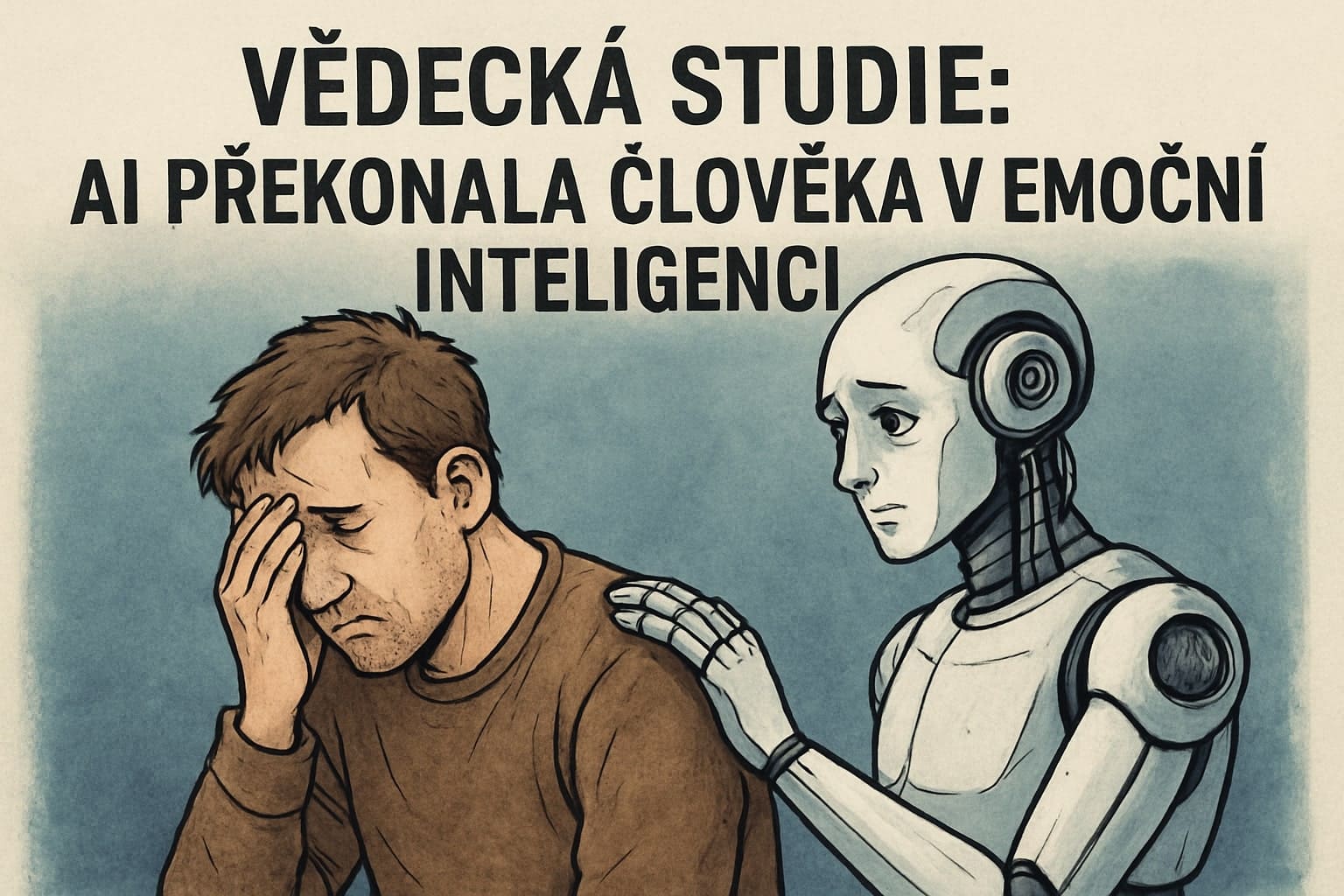
A groundbreaking study published in May 2025 revealed the surprising capabilities of large language models in the field of emotional intelligence. Research conducted by a team of scientists led by Katja Schlegel, Nils R. Sommer, and Marcello Mortillaro demonstrated that current AI systems can not only solve emotional intelligence tests but also create them at a level that significantly exceeds average human performance.
Research Methodology
The study, published in Communications Psychology, part of the prestigious Nature Communications family of journals, focused on testing six generative artificial intelligence systems, with ChatGPT and GPT-4 among the main models tested. The researchers created a comprehensive set of emotional intelligence tests designed to assess the ability of AI systems to identify emotionally intelligent responses in various scenarios involving complex emotions such as sadness, anxiety, or irritation. Each test required the large language models to select the most emotionally intelligent response to specific situations from a series of options. Typical tasks involved choosing the best coping strategy for people experiencing negative emotions from several available options. This methodology enabled a direct comparison of AI system performance with that of human respondents on identical tasks. The researchers also experimented with a technique called the "Emotion Prompt," a special form of prompt engineering that incorporates emotional context into instructions for AI. This method aimed to further improve model performance in both deterministic and generative tasks related to emotional intelligence.
Results Exceeding Human Abilities
The study's most remarkable finding was that large language models achieved an average success rate of 81% in emotional intelligence tests, while humans averaged only 56% on the same tests. This statistically significant difference suggests that current AI systems not only understand emotions but can also apply the principles of emotional intelligence more systematically and consistently than the average person. The consistency of the results was another key finding. The AI models produced the same responses in repeated trials, demonstrating the reliability of their performance when evaluating emotionally charged scenarios. This stability contrasts with human variability, which can be influenced by mood, fatigue, or other contextual factors. The study also revealed that the models not only recognized emotional cues but demonstrated a deeper understanding of what it means to behave with emotional intelligence. This finding is particularly significant because it suggests that AI systems can apply complex emotional concepts in practical situations.
Expert Reactions
Dr. Marcello Mortillaro, a senior researcher at the Swiss Center for Affective Sciences (CISA) and one of the study's lead authors, commented on the results: "This suggests that these AI systems not only understand emotions but also understand what it means to behave with emotional intelligence." His comment highlights a significant shift from merely recognizing emotions to actively applying emotionally intelligent strategies. This statement has far-reaching implications for understanding how AI systems process and apply emotional information. While earlier research often focused on AI's ability to recognize emotions in text or images, this study shows that current models can also reason strategically about how best to handle emotions.
Technical Aspects and Performance Improvements
Implementing the Emotion Prompt technique led to further improvements in the performance of AI models. This method involves incorporating emotional context directly into instructions for AI, allowing the models to better understand the emotional dimension of the task. The results showed that this technique improved performance both in tasks requiring specific answers and in generative tasks where the AI must create its own emotionally intelligent content. This finding has practical implications for the development of AI applications. It shows that carefully designed prompts can significantly improve the ability of AI systems to work with emotions, opening up opportunities to optimize these systems for specific applications in mental health, education, or customer service. The robustness and adaptability demonstrated by large language models in the area of emotional intelligence suggest that their understanding of emotions is not merely superficial or mechanical but involves a deeper comprehension of emotional processes and their practical applications.
Implications for the Future of AI and Human Interactions
The results of this study are of fundamental importance for the future development of artificial intelligence and its integration into society. The fact that AI systems can outperform humans in emotional intelligence tests opens up new possibilities for their use in areas that previously required an exclusively human touch. In a therapeutic context, these advanced AI systems could provide consistent and emotionally intelligent support to patients. Unlike human therapists, who may have a bad day or be influenced by their own emotions, AI systems could provide a stable level of emotional support. At the same time, however, this finding raises questions about whether AI's consistency can adequately replace human empathy and authenticity. In educational settings, emotionally intelligent AI could provide personalized support to students based on their emotional state and needs. It could identify students under stress and offer appropriate coping strategies, or recognize demotivated students and provide them with encouragement and support.
Considerations and Challenges
However, AI surpassing human abilities in emotional intelligence also presents significant ethical challenges. Artificial intelligence's ability to understand and potentially manipulate human emotions raises questions about privacy, autonomy, and the authenticity of human relationships. There is a risk that highly emotionally intelligent AI could be misused to manipulate people through sophisticated emotional influence. This is particularly concerning in the context of marketing, politics, or other areas where emotional manipulation could be used to influence human behavior. At the same time, the question arises whether AI that surpasses humans in emotional intelligence can truly understand emotions or merely simulates understanding in a highly sophisticated way based on patterns in data. This philosophical dilemma has practical implications for how much AI systems should be trusted in emotionally sensitive situations.
Future Research
The May 2025 study opens up new directions for research in AI and emotional intelligence. Future research could focus on understanding the mechanisms through which AI systems achieve high emotional intelligence and on developing methods to further improve these abilities. Another important direction is research into the differences between various types of AI models and their emotional intelligence capabilities. Understanding which architectural elements or training methods lead to better emotional intelligence performance could guide the future development of AI. Further research could also focus on the cultural and contextual aspects of AI emotional intelligence. Current studies are often based on Western concepts of emotional intelligence, but emotions and their expression differ significantly across cultures.
The results of this pioneering study represent a significant milestone in the field of artificial intelligence and suggest that the boundaries between human and artificial cognitive abilities continue to shift in ways that we would have considered impossible just a few years ago. As AI systems become more emotionally intelligent, it will be crucial to strike a balance between harnessing their potential and protecting human values and autonomy.