

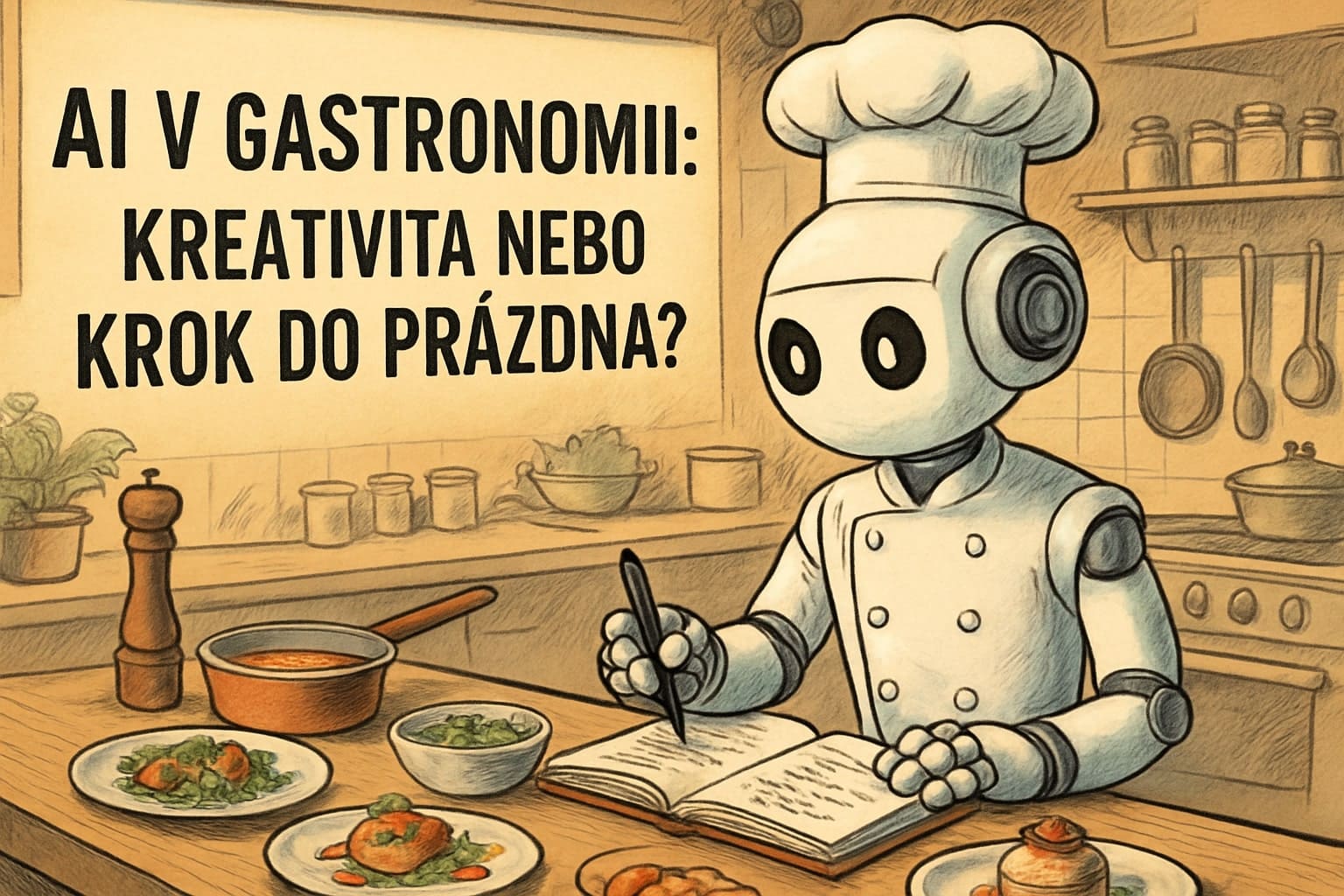
AI in Gastronomy: Creativity or a Step into the Void?
Artificial intelligence is making its way into every corner of human activity, and now another field has emerged as the subject of passionate debate—gastronomy. Grant Achatz, a world-renowned American chef, recently unveiled a fascinating yet controversial approach to creating new recipes using ChatGPT. His experiment forces us to consider questions of creativity, authenticity, and the value of human mastery in the emerging age of algorithms.
What Is the Point?
Achatz's approach is remarkably sophisticated. Instead of simply prompting it to "create a recipe," he asks the artificial intelligence to simulate the personas of different imaginary chefs for each course of a meal. These fictional culinary characters are not created at random—they are carefully composed as a blend of influences from real legends of gastronomy. One such AI character is "Jill," a thirty-three-year-old woman from Wisconsin who, according to her artificial résumé, trained under masters such as Ferran Adrià, Jiro Ono, and Auguste Escoffier. This creative construct contains a fascinating paradox—using technology, it attempts to reconstruct and reinterpret decades of human culinary development and experience.
Achatz asks the chatbot to generate recipes that reflect the unique personal and professional influences of these imaginary chefs. As he himself describes it, he wants AI to "do as much as possible, except actually prepare the food." This approach reveals an intriguing philosophy—an effort to deconstruct and recombine culinary wisdom that has been passed down from master to apprentice for generations. It is an attempt at an algorithmic synthesis of tradition and innovation, in which the cumulative knowledge of legendary chefs is filtered through the prism of artificial intelligence.
Considerable Criticism
However, reactions to this experiment have not been uniformly positive. While some media outlets, including the prestigious The New York Times, have expressed fascination with this AI-driven creative process, social media has become the scene of polarized debate. Critics describe this approach as disrespectful to the real chefs whose work is algorithmically "remixed" without their direct involvement or consent. One commenter on the Bluesky platform called it "an insult to Ferran Adrià, Jiro Ono, and the many talented chefs who work for Achatz and have real experiences that could be reflected in the dish." This criticism points to a deeper issue that extends beyond the boundaries of gastronomy. It touches on the very nature of creativity and the value of human experience. Is it truly possible to reconstruct algorithmically the intuition that develops after years of working with ingredients and understanding their flavors, aromas, and textures? Can artificial intelligence capture those elusive moments of inspiration that arise amid the stress of a professional kitchen, through interactions with colleagues, or from memories of a grandmother's cooking?
Is It Really That Terrible?
Achatz's experiment confronts us with a paradox of our time. On the one hand, it presents a fascinating opportunity to democratize culinary knowledge—a way to make the wisdom of gastronomy's greats accessible to a broad audience through technology. On the other hand, it raises questions about authenticity and respect for tradition. When AI creates recipes "in the style of" Ferran Adrià, does that constitute a form of digital plagiarism? Or is it a legitimate evolution of the culinary arts? This experiment also reveals broader trends in the creative industries. Artificial intelligence is already composing music, painting pictures, and writing poetry. Gastronomy, as one of the most intimately human art forms, seemed naturally resistant to automation. Achatz's approach, however, suggests that not even this field is untouchable. This raises the question of whether we are witnessing a natural evolution of creative processes or, conversely, their degradation.
Perhaps, however, the key lies in how we use these tools. Achatz is not replacing human chefs with artificial intelligence, but using it as a source of inspiration. In this context, AI could function much like a culinary library—a source of ideas and techniques that a human chef interprets and adapts according to their own vision and experience. The question, then, is not whether this is right or wrong, but how to strike a balance between technological efficiency and preserving the human dimension of gastronomy.
Achatz's experiment represents much more than just a way of creating recipes. It is a symbol of our time—an era in which we are trying to define the boundaries between human and artificial capabilities, between tradition and innovation, between respect for the past and a desire for the future. In the kitchen, where science blends with art and every dish tells a story, these questions become especially urgent.


