

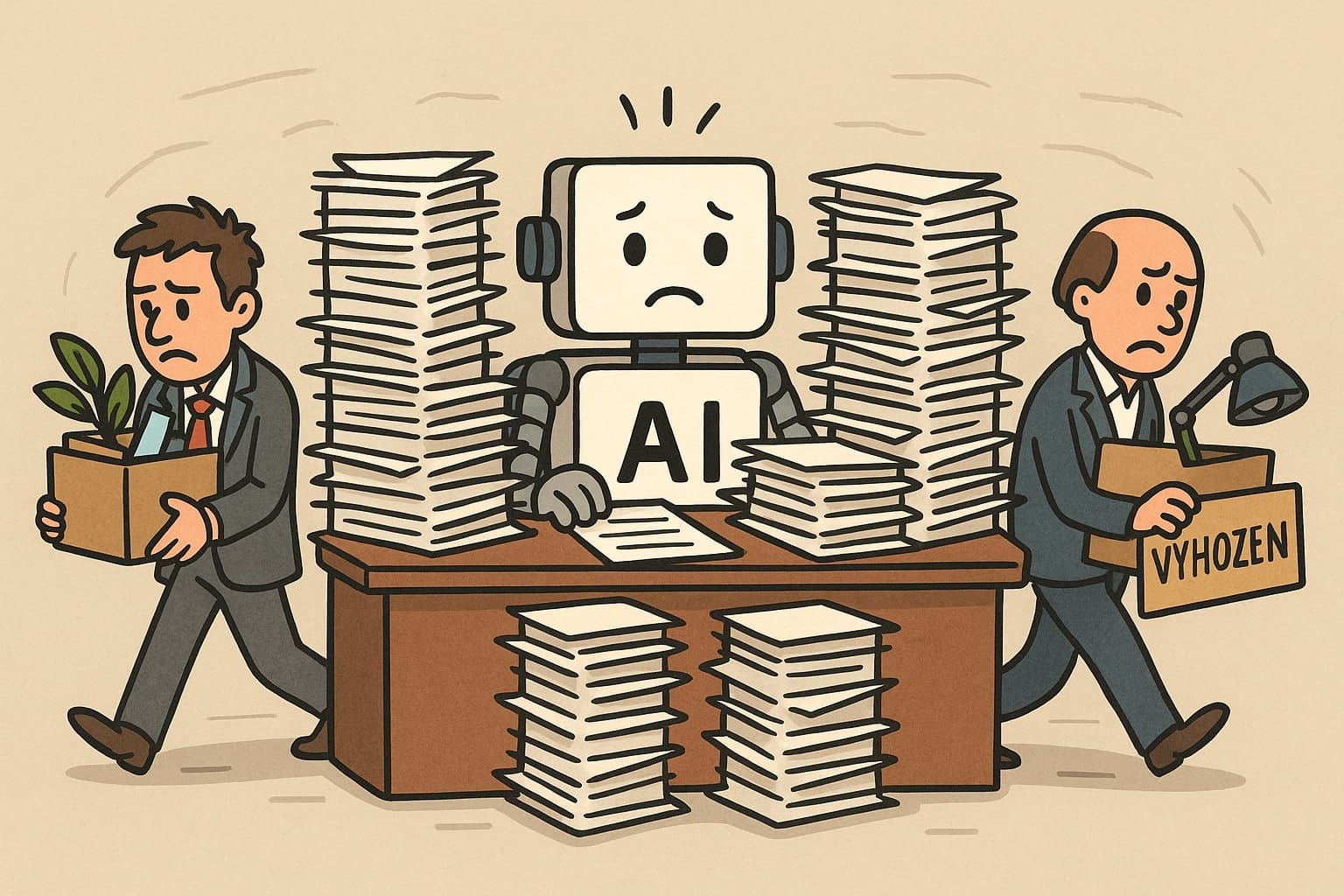
In recent weeks, Silicon Valley has been rocked by a wave of layoffs. Amazon announced it would cut about 14,000 corporate positions, which the company says is linked to the need for a leaner structure to capitalize on artificial intelligence opportunities. Chegg reduced its workforce by 45%, citing the "new realities" caused by AI. Salesforce laid off approximately 4,000 customer service employees, with CEO Marc Benioff claiming that AI agents had taken over their work.
But experts do not see it as so black and white. Martha Gimbel of Yale's Budget Lab warns against overreacting to announcements by individual companies because everyone is afraid of AI. Technology investor Chamath Palihapitiya points out that the recent layoffs reflect companies' specific hiring practices and economic cycles more than anything else. Oxford researcher Fabian Stephany agrees.
The Pandemic and Interest Rates Play a Role
Yale’s Budget Lab has tracked market data since 2022 and found that many companies now laying off employees hired aggressively during the pandemic, when interest rates were close to zero. Now that borrowing costs have risen, companies are making cuts—and AI serves as a convenient excuse that helps their image.
For example, Amazon reported quarterly results in July that exceeded Wall Street expectations, including a 13% increase in sales to $167.7 billion (approximately CZK 3.9 trillion). Nevertheless, the company plans to make cuts so that it can be "organized more leanly." Enrico Moretti of the University of California, Berkeley, says that large tech companies such as Amazon are at the forefront of AI-related cuts because they are both producers and consumers of AI.
AI Replaces Only a Tiny Fraction of Skills
According to Indeed’s AI at Work Report 2025, AI can replace only about 0.7% of nearly 3,000 job skills. What we are seeing is a mixture of actual AI-driven job replacement and convenient corporate rhetoric. Distinguishing one from the other will take years.
In Chegg’s case, the online education company’s elimination of 388 roles (45% of its workforce) is linked to a decline in traffic caused by AI tools such as ChatGPT. In February, the company sued Google for harming its traffic with its AI Overviews, but so far without success. New CEO Dan Rosensweig, who is returning from a more successful era at the company, has been tasked with restructuring it.
No Massive Shift in the Labor Market Yet
Research from the Federal Reserve Bank of St. Louis found a link between occupations with greater AI exposure and rising unemployment since 2022, but only in certain sectors such as administrative support. Morgan Frank of the University of Pittsburgh found that after ChatGPT launched in November 2022, the likelihood of unemployment increased only for office and administrative roles in early 2023.
Lawrence Schmidt of the MIT Sloan School of Management says that Amazon can automate faster because of its size, but he expects a redistribution of roles rather than massive job losses. The labor market is changing faster than in the past, but not dramatically—and this is primarily due to economic cycles, not AI alone.


