

AI Designs Viruses That Destroy Resistant Bacteria
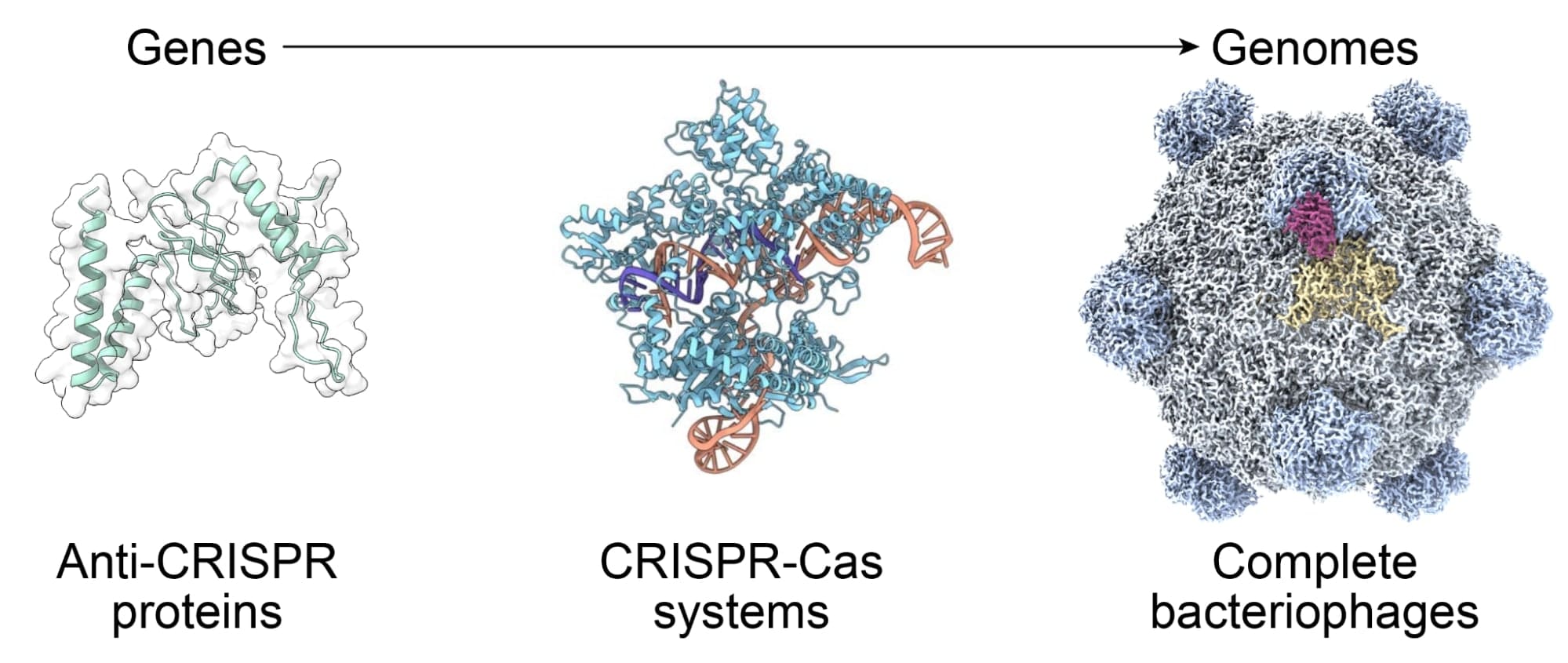
Scientists at the Arc Institute have achieved a breakthrough in artificial intelligence and biology. Using Evo models, they created the first fully functional synthetic genomes of bacterial viruses known as phages. These genomes are based on the historic phage ΦX174, which has 5,386 nucleotides and encodes 11 genes. In 1977, this phage became the first genome to be sequenced, thanks to Fred Sanger and his team, and in 2003, the first genome to be chemically synthesized by Craig Venter. Now, in 2025, it serves as the basis for AI design, marking a shift from reading and writing DNA to designing it.
Choosing ΦX174 as the Basis
Phage ΦX174 was chosen because its size is at the limit of what current DNA synthesis costs allow. Its genes overlap, complicating the design because changes in one region affect multiple proteins at once. The genome contains regulatory elements and sequences for replication and packaging into host cells. Scientists, including Samuel King and Brian Hie, developed their own gene annotation tool capable of identifying all 11 genes, unlike standard methods, which find only seven. This tool was used to filter thousands of generated sequences, which were required to retain at least seven protein matches with the natural ΦX174.
Fine-Tuning the Evo Model to Generate Genomes
The Evo model was originally trained on millions of phage genomes, but for this purpose, the scientists fine-tuned it on a dataset of 14,466 sequences from the Microviridae family, clustered at 99% identity. This made it possible to generate sequences similar to ΦX174 but with sufficient variability. The scientists carefully adjusted the input prompts and sampling parameters to achieve a balance between similarity and novelty. Of 302 designs, 285 were chemically synthesized and tested in the bacterium Escherichia coli C. Sixteen proved viable, with between 67 and 392 mutations compared with the closest natural genomes. For example, Evo-Φ2147 has 392 mutations and 93% nucleotide identity with phage NC51, making it a candidate for a new species.
Testing Functionality and Host Specificity
For testing, the scientists developed a method based on inhibiting bacterial growth in a 96-well format. The synthetic genomes were assembled using Gibson assembly and introduced into competent E. coli C cells. Successful infections caused optical density to decrease within two to three hours. All functional phages were restricted to E. coli C and the related E. coli W strain, with no growth on the six other strains tested. Some phages, such as Evo-Φ69, outperformed the original ΦX174 in competition for hosts, with their abundance increasing by as much as 65-fold. One phage, Evo-Φ36, incorporated protein J from the distantly related phage G4, something that had previously failed in manual engineering. Cryo-electron microscopy revealed that this shorter protein (25 amino acids compared with 38) assumes a different orientation in the capsid.
Combating Bacterial Resistance
The synthetic phages demonstrated an ability to overcome bacterial resistance. The scientists developed three resistant E. coli strains with mutations in the waa operon, which modifies surface receptors. Cocktails of AI-designed phages overcame resistance in all three strains within one to five passages, while the original ΦX174 failed. The successful phages were mosaics, combining elements from two to three designs, with mutations concentrated in surface regions that interact with receptors. This highlights the advantage of AI-generated diversity, which provides multiple pathways for adapting to resistance and could transform phage therapy from a random process into a systematic one.
Future Possibilities
This approach opens the door to designing phages for pathogens such as Pseudomonas aeruginosa, which causes respiratory infections, or Xanthomonas capestris, which destroys crops. Evo models are publicly available, and DNA synthesis costs range from $0.07 to $0.45 per base. As prices decline and models improve, more complex genomes could be designed, making it possible to explore biological possibilities beyond natural evolution. This development is moving biotechnology toward new horizons, where AI helps solve problems such as multidrug-resistant infections, which kill hundreds of thousands of people every year.
Source: arcinstitute.org


